Part of the topic guide Music Rights Checklist Before You Release
Using Samples in a Song You Release
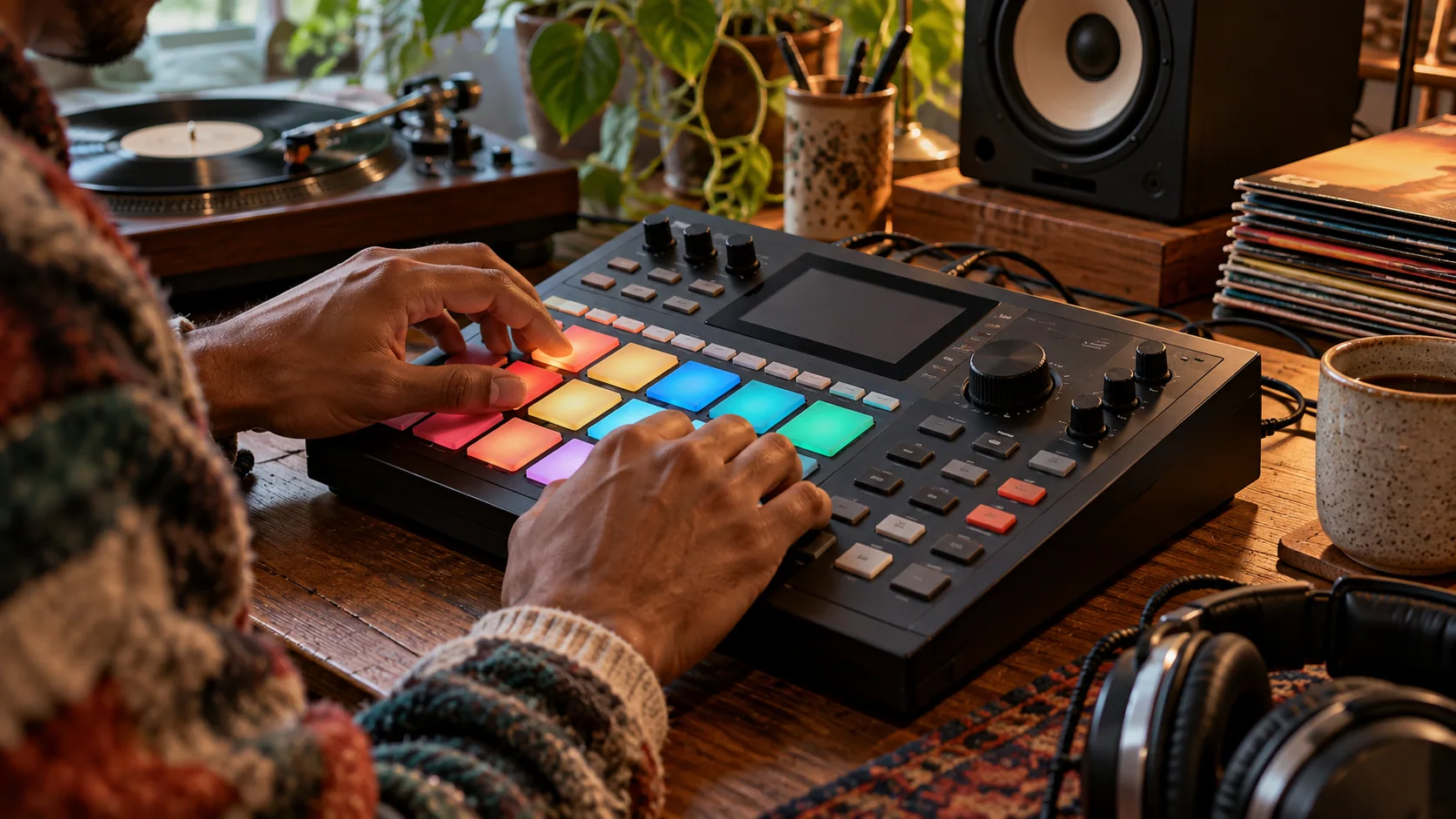
Sooner or later every producer reaches the same moment: the track is nearly done, and one sound in it came from somewhere else. It might be a loop from a pack, a vocal chop from an old record or a melody you re-sang from a song you grew up with. Each needs a different kind of permission, and a store, a rights owner or a claim system may ask you to show it after release.
This guide separates the cases, explains what two well-known sample libraries’ licences say, what Content ID and the stores can flag, what evidence to keep and how to declare it in the WBBT Release Wizard. It is practical guidance, not legal advice. Copyright differs between countries, and a real dispute belongs with a music lawyer. Every external page named below was opened on 26 October 2026.
Why one sample usually needs two permissions
A released track carries two copyrights: the composition (melody, harmony, lyrics) and the recording, or master. Lifting audio from a record uses both, the recording and the song inside it. The US Copyright Office handout on sampling says licences from both owners may be necessary and are in many cases held by different people. LANDR’s sampling article agrees: the recording usually belongs to the performer or label, the composition to the songwriter or publisher, and a licence for one is not enough.
| What you used | Permission usually needed |
|---|---|
| Audio from a commercial record | The recording owner and the song owner |
| A melody or lyric re-sung as new audio | The song owner (see interpolations) |
| A loop or one-shot from a royalty-free pack | Whatever the pack licence says |
| A modern recording of an old public-domain song | The recording owner; the song itself may be free |
The last row catches people out. LANDR points out that a composition can be public domain while a recording of it is still protected, and that field recordings are risky if they capture copyrighted music or identifiable performers.
Cleared samples: what clearing involves
Clearing means getting the owners’ permission and agreeing terms before you release. Length and alteration do not decide it. PRS says you need permission to sample any piece of music, no matter how short. The Copyright Office handout says no formula guarantees that a number of seconds is safe, and LANDR adds that heavy alteration does not reliably protect you. GOV.UK describes the parody, pastiche and quotation exceptions as narrow, tied to fair dealing and judged case by case, and does not mention sampling at all.
- Identify the exact recording: title, artist, year, version and the timestamp you used.
- Find the owners. PRS says its works database helps you find rightsholder details. For the recording, start with the label.
- Ask for both permissions in writing. Say what you used, how long it plays and where you plan to release.
- Agree terms: a fee, a royalty share, a credit or a mix. LANDR warns that owners may not reply or may ask for more than you can pay, so plan for delays and keep a version without the sample.
- Register the result. PRS says that to receive royalties on a work with samples you get permission, agree the royalty shares and register the work listing the rightsholders and their shares.
Do not release first and ask afterwards. LANDR notes that you can be liable even if you did not know a sample was uncleared. If an owner refuses, replace the sound.
Interpolations: re-recording instead of sampling
An interpolation re-records part of an existing song, such as a hook or a lyric, as new audio. Under US law, the Copyright Office handout explains, that implicates only the song, so a licence from the song’s owner may be all that is needed, however similar the new recording sounds. Re-recording a whole song is a cover, covered in our guide to releasing a cover song legally.
UK sources are less direct. PRS says arranging a work you did not write, including changes to its melody, harmony, rhythm or instrumentation, needs the rightsholder’s permission. So for a UK release, treat a re-sung hook as needing the song owner’s consent and ask a music lawyer about the recording side. The US handout adds that nobody can stop you using building blocks such as scales and chords. Where a building block ends and a borrowed melody begins is a question for a lawyer. Interpolations involve one owner instead of two, so they are often easier to clear, but the owner can still ask for a fee, a share or a writing credit.
Royalty-free packs: what licences allow and forbid
“Royalty-free” means you do not pay each time you use or sell the sound. It does not mean there are no rules, or that the sound is yours alone. We read the licences of two large libraries.
| Topic | LANDR Samples | Splice Sounds |
|---|---|---|
| Commercial release | Allowed inside your own recordings, worldwide | Allowed in new recordings, commercial or not |
| Ownership | You keep your recording, not the samples | Same, and the licence is non-exclusive, so others hold the same sounds |
| Passing the sounds on | Forbidden except inside your recording | Forbidden: no loops or new sample packs |
| AI and machine learning | Forbidden | Forbidden |
| Artist names | Not without permission; no implied endorsement | Not without written permission |
| Other conditions | Keep each sample’s metadata; rights can be suspended after a breach and restored if fixed within 30 days | Preview-marked sounds cannot be used commercially; the licence depends on continued compliance |
These agree on the shape of a typical pack licence: you may build the sound into your finished recording and release it commercially, and you may not pass on the raw sound, repackage it, train AI on it or lean on an artist’s name. Other libraries differ, so read yours. Terms also change, and Splice’s page states a July 2026 update, so save a dated copy of the licence when you download. Splice says sounds you have downloaded stay licensed if you cancel, but check that for your own library before you let a subscription lapse. A pack licence also covers only what the provider owns: Splice says providers must confirm they are not breaking other agreements and that it may contact past buyers if a sound carries legal risk, so keep your account email current.
What Content ID and the stores can flag
YouTube describes Content ID as an automated system: owners submit reference files, every upload is scanned against them, and a match produces a claim that can block, monetise or track the video. Shared sounds make that awkward. WBBT’s FAQ says non-exclusive audio can generate conflicting claims, and Splice says it cannot guarantee a track made with its sounds will not be flagged. YouTube’s eligibility page requires exclusive rights and lists licensed music whose licence is not exclusive as ineligible. LANDR says monetising through Content ID, TikTok, Instagram or Facebook usually needs fully original or exclusively owned sounds. Our Content ID guide has the rest.
If a claim lands on your video, YouTube lists holding the necessary rights, a qualifying copyright exception or a claim made in error as valid grounds to dispute. Giving credit, owning a copy or not monetising are not. The claimant then has 30 days to respond, which is where saved licences earn their keep.
Stores differ. Spotify’s copyright policy says it acts on notices from rights owners, may remove content or block it in some countries, may end the accounts of repeat infringers and uses automated and manual signals to find infringing content. LANDR says platforms may ask for proof of rights, which can delay or reject a release, and WBBT’s FAQ lists rights conflicts among the common reasons a release is returned. Passing review does not make a release immune to a later notice, and the absence of a flag is not permission.
Evidence to keep for every release
Keep one folder per release, for as long as the release is live:
- A sample list: each borrowed sound, its timestamp and its source.
- For packs, a dated copy of the licence, the pack name, provider and download date, the receipt and any certified licence the provider offers.
- For cleared samples and interpolations, each owner’s signed written agreement with fee, share, credit and territory.
- The project file or stems showing the sound in place, and the original file.
- A split sheet that includes any share promised to a sample or song owner; see royalty splits and payouts.
- The PRS registration listing the rightsholders and shares, and a note of what you declared in the wizard.
How to declare it in the Release Wizard
The wording matches our guides to leased beats and the pre-release rights checklist. Answer so that the wizard matches the paper.
- Content Ownership. 100% Original (My Content) is for a track where everything is yours. Contains Samples (License Required) is for material someone else made, such as a cleared sample or a leased beat. In our reading of the two answers, a recognisable loop or vocal from a pack is also material someone else made and licensed to you. If you used one generic one-shot and are unsure, write to support before you submit.
- Legal Documents. Contains Samples means the release cannot be submitted until clearance documents are uploaded as PDF, JPG or PNG. Upload the signed clearances and the pack licence or receipt.
- Credits. Every track needs a Producer, a Composer with a full first and last name and a Performer. If a clearance gives a song’s writers a credit or share, add them as composers with the agreed shares.
- Territories and Content ID. Select only the countries your permissions cover, and leave Content ID unticked unless every sound is yours alone.
- AI usage. This is a separate question; how to distribute AI music explains it.
Tell support about any restriction in a licence, such as a cap, a territory or an end date. The final review asks you to confirm that you hold the rights needed, so make that statement only when your folder can back it up.
A worked example, with invented details
Example Sound is finishing a single called “Night Bus”. The song and every detail below are invented to show how the pieces fit.
| Element | What it needs | In the wizard |
|---|---|---|
| Drum loop from a pack | Pack licence allowing commercial release; dated PDF and receipt saved | Contains Samples; licence uploaded |
| Two-second vocal chop from an old soul single | The label’s and the publisher’s signed permission; PRS registration with shares | Contains Samples; both agreements uploaded; writers added as composers with shares |
| Sung hook echoing another song’s melody | The song owner’s written consent and share | Composer credits with that share |
| Piano recorded by Example Sound | Nothing; session files kept | No entry |
The chop clearance covers Europe only, so Example Sound selects European territories. The loop is shared with every pack user and the chop belongs to someone else, so the Content ID box stays unticked. Example Sound also sent the clearance requests well before the release date and kept a version without the chop in case the label said no.
Frequently asked questions
Is there a length of sample that needs no permission?
No. PRS for Music says you always need the rightsholders’ permission to sample any piece of music, however short. The legal exceptions are narrow and judged case by case, so do not plan a release around one.
Can I register a track made with pack samples for Content ID?
Usually not. YouTube limits Content ID to owners with exclusive rights, and pack licences are non-exclusive. Permission to release the track and permission to register it are separate questions, so leave the box unticked unless the sound is yours alone.
Do I have to credit the pack or its creators?
Read the licence. LANDR’s terms ask you to keep a sample’s metadata attached, and Splice says you must disclose third-party samples when registering with a rights society but need not credit Splice or the creators. Never credit an artist in a way that suggests they endorse your track.
What if a released track contains an uncleared sample?
Do not ignore it or re-upload the same audio. Tell WBBT support early, ask the owners for permission and be ready for a takedown or a replacement version if they refuse. Take advice from a music lawyer if money or a threat is involved.
Does an interpolation need the recording owner’s permission?
Under US law, per the Copyright Office, it needs the song owner’s permission but not the original recording owner’s, because the audio is recorded afresh. We found no UK official page that says so as plainly, so treat the song-side permission as required and ask a music lawyer about the rest.
Sources and next steps
Licences and policies change, so check the current text before you rely on a point.
- LANDR terms of service, Samples licence section (accessed 26 October 2026), and Is Sampling Legal?, LANDR Blog, 9 February 2026 (accessed 26 October 2026).
- Splice Sounds Licensing FAQ, 6 September 2024, Splice Terms of Use, updated 24 July 2026, and Splice posts on certified licences and originality (all accessed 26 October 2026).
- Arranging and sampling works, PRS for Music (accessed 26 October 2026).
- Sampling, Interpolations, Beat Stores and More, US Copyright Office, December 2021, describing US law (accessed 26 October 2026).
- Exceptions to copyright, GOV.UK (accessed 26 October 2026).
- YouTube Help: Qualify for Content ID, How Content ID works and Dispute a Content ID claim (accessed 26 October 2026).
- Spotify copyright policy (accessed 26 October 2026).
Next, read Release Metadata and Artwork Requirements for credits and copyright lines. The YouTube Content ID page and the pricing page show what the service is and which plans include it, the FAQ answers rights questions, and when your papers are ready you can submit your release.
YouTube Content ID →
Help eligible recordings earn from video use.